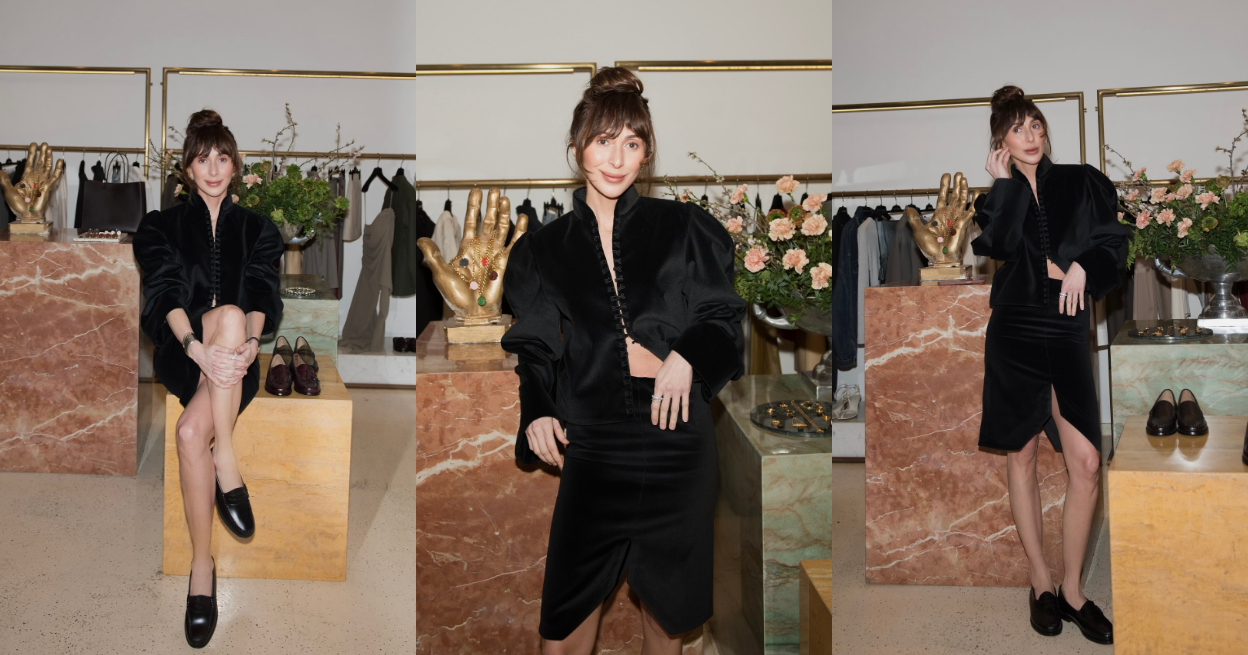
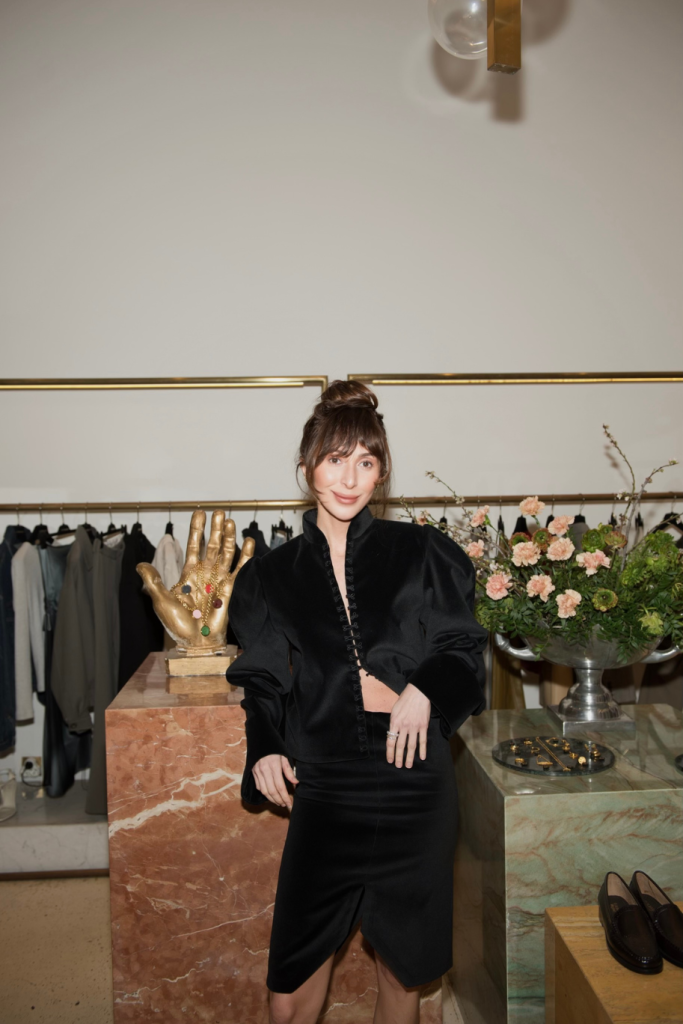
The Fashion Worker column returns, this time hosting Nino Eliava- the founder of MORE is LOVE and the creative force behind 0711. While a Master’s degree from London is often synonymous with a formidable academic foundation, the experience gained in this city represents far more than a mere diploma. It is a space where theory collides with reality, creativity meets strategy, and the individual confronts global competition.
What happens when a young professional finds themselves in the industry’s “inner kitchen,” where narratives are forged, trends are born, and success no longer hinges on knowledge alone? How does the perspective shift when fashion is revealed not just as aesthetics and beauty, but as a rigorously structured business built on analytics and strategic foresight?
In this exclusive interview for Nargis, Nino Eliava traces this very trajectory- from her formative London years to the creation of a global platform; from the realization of self-identity to capturing the attention of international retailers. The conversation delves into the “informal lessons” absent from any textbook, yet essential for survival and success in the industry. This is a story not just of brands, but of a cognitive transformation—the shaping of a person and the evolution of her ideas.
At 17, while your peers were still exploring potential career paths, you were already actively immersed in fashion journalism. How did you manage such early professional self-determination?
To be honest, at 17, I didn’t exactly “choose” a profession- I was simply doing what came naturally to me. I grew up in an environment where aesthetics and ideas were part of daily life. For me, fashion was never superficial; it was always an expression of identity.
What challenges did you face while working as a fashion journalist?
The greatest challenge was defending fashion as a serious discourse. In society, fashion is often perceived as a shallow field, but in reality, it is a mirror of social, political, and cultural processes.
A Master’s degree from London is associated with deep academic knowledge, but what was the primary “informal lesson” you learned- something that wasn’t in any textbook and could only be gained through the experience of that city?
My main discovery was that the skills you truly need to survive and succeed in this industry aren’t written in textbooks. In London, I realized that theory is merely a framework. In real-world processes, the most vital elements are communication, intuition, time management, emotional intelligence, and the ability to adapt quickly. Being in the industry’s “inner kitchen” taught me how the system works behind the scenes- how narratives are constructed, how trends are born, and the immense role the individual plays, far beyond just their academic knowledge.
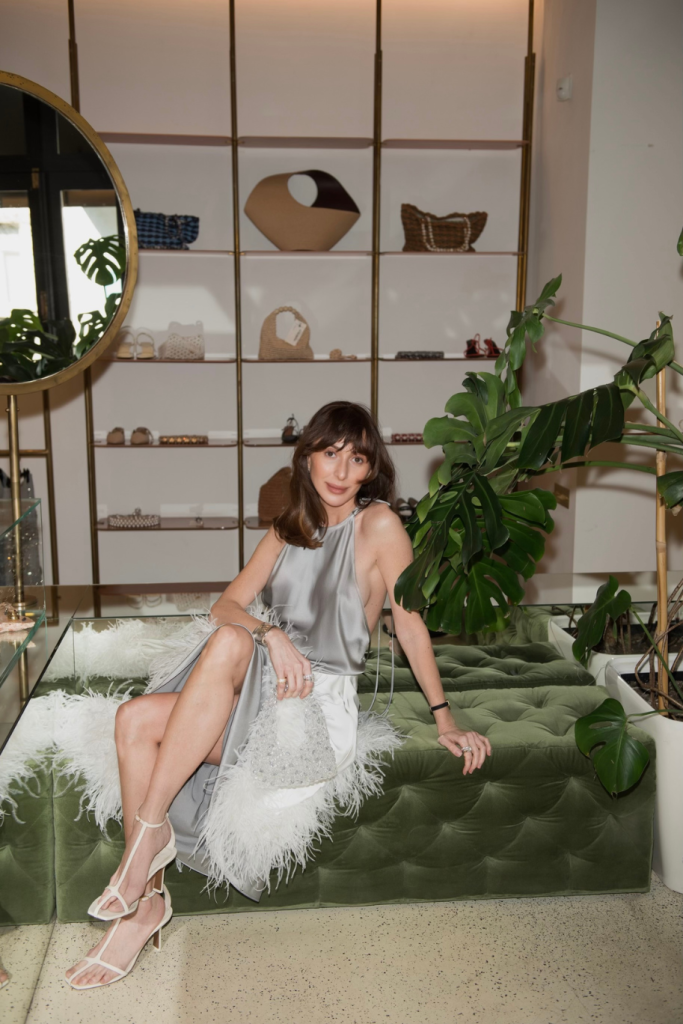
How significantly did London reshape your preexisting notions of the fashion business?
London completely transformed my perspective. Previously, I viewed fashion primarily through the lens of creativity- ideas, aesthetics, and beauty. In London, however, I realized that fashion is, first and foremost, strategy. It is built on rigorously defined business models, data-driven decisions, and formidable financial analytics. While creativity is essential, it is merely one component of a system that functions with far more complexity than it appears from the outside. That said, I still believe intuition remains the most powerful skill in any field.
While in London, did you have the opportunity to work within your profession?
Yes- I worked with publications such as Harper’s Bazaar, Buro24/7, and Grazia. I was a street-style photographer and ran my own blog, Trivial Insanity, which became quite successful. That was when I truly learned how to collaborate with international brands. I also completed an internship at TATA NAKA.
Often, living in a different country allows us to perceive our own identity in a new light. In such an international environment, which of your traits or habits most clearly reflected the so-called “Georgian character” or “Georgian soul”?
It was in London that I realized just how strong my sense of self-identity is. In an international environment where it’s easy to simply become a cog in the machine and blend into the rules unnoticed, I did the opposite- I more clearly defined who I am.
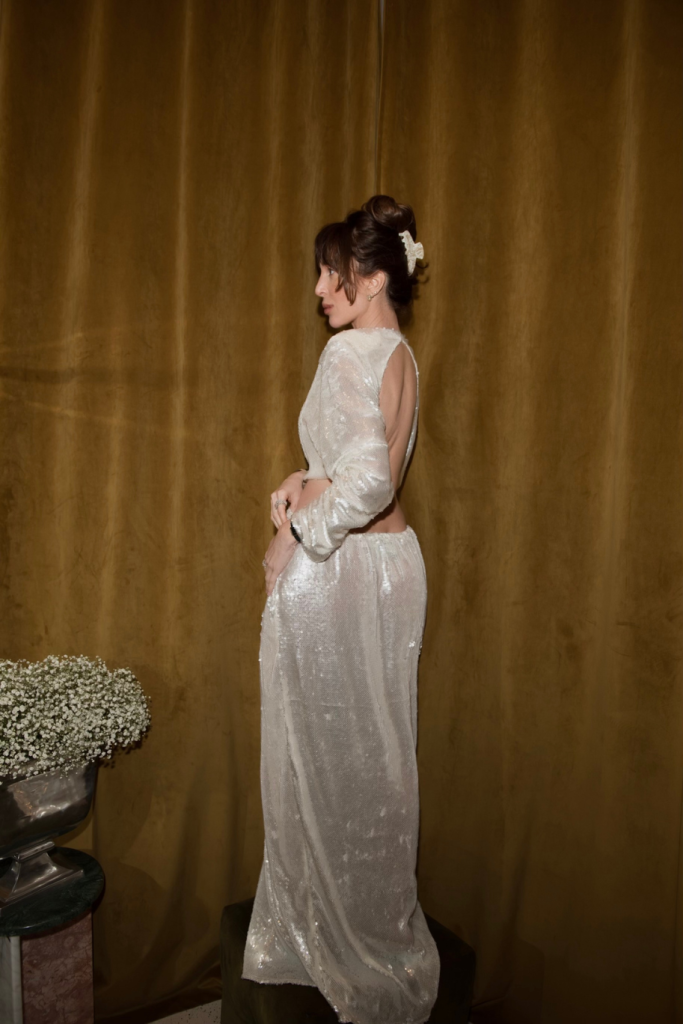
You often mention that MORE is LOVE was a “natural evolution” of your work. At what stage of your career- or through what specific experience- did you realize that the Georgian market needed more than just another store, but a global online platform?
During my time studying in London and working with international brands, I saw clearly how the global fashion ecosystem functioned—how an online platform worked not merely as a sales channel, but as a curated space where brand, narrative, and communication existed as a unified system. That was exactly what the Georgian market lacked: not just a shop, but a platform that would place local designers within a global context.
When founding MORE is LOVE, what was your initial vision? Now that the project is established and successful, has the so-called “ideal goal” been achieved?
My primary intent was to create a curated platform that would grant independent designers global visibility. I wanted it to be a space where quality and authorship were more important than mass trends. The original idea was to build a bridge between the local and the global. I believe MORE is LOVE has maintained- and even strengthened- that function.
MORE is LOVE entered a market where online shopping culture was virtually non-existent. How did you manage to engage consumers and, more importantly, establish a completely new behavioral norm? What was your “main weapon” against the natural skepticism that comes with buying an item without trying it on first?
Our task wasn’t just to sell a product- it was to build trust. We paid immense attention to curation, visual communication, and the finer details. The consumer needs to feel that every item is selected with taste and responsibility. Transparency was also key- quality standards, service, and feedback. When someone buys an item “untried” for the first time, they don’t just need a beautiful photo; they need the sense that the brand is standing right there beside them.
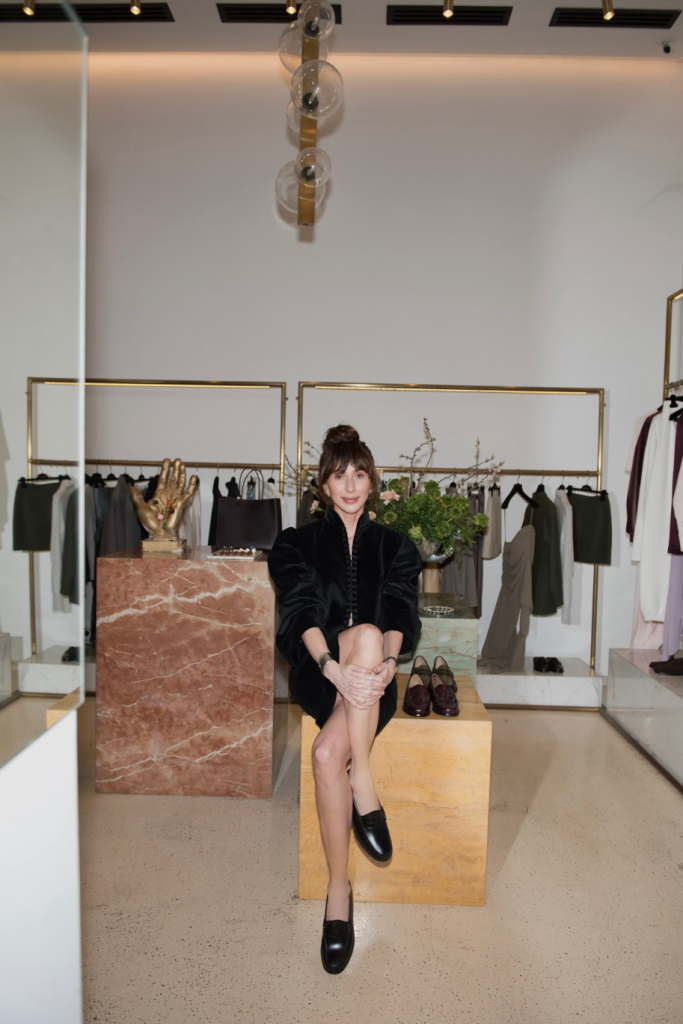
The foundation of the 0711 brand is traditional Georgian hand-knitting techniques, which you have placed in a completely new, contemporary context. How did these two seemingly distant worlds-ancient tradition and futuristic design- intersect?
Tradition shouldn’t remain only in a museum. It must live. Georgian knitting techniques were the foundation for me, but the form is entirely contemporary. I wanted to create an object that would serve as a cultural code, yet remain visually global.
As a Creative Director, how do you manage to find the balance between commercial demands and creative freedom?
For me, the balance between commerce and creativity begins with protecting the brand’s DNA. If the identity is clear, you can be free in form, color, and concept without losing your essence. With every new collection, I have two goals: to remain recognizable, yet remain unexpected. Relevance doesn’t come from chasing trends; it comes from amplifying your own voice.
Today, 0711 bags are sold on the world’s leading platforms, such as Net-a-Porter and Farfetch. How did you capture the attention of these retail giants? Was it purely the product’s visual appeal, or the story and authenticity behind the brand?
Visuals are vital- especially in a digital age where the first impression is formed on a screen. In the case of 0711, the distinct silhouette, color palette, and signature style certainly create that “stop-scroll” effect that catches a buyer’s eye. But that alone isn’t enough. What truly works are three factors: a Clear Identity – From the start, the brand had a distinct, easily recognizable DNA- hand-knitting, sculptural forms, and cultural subtext. This wasn’t a product “tailored to a trend,” but a brand with its own voice; An Authentic Narrative – In the global market, authenticity is no longer just a buzzword- it’s a competitive advantage. “Made in Georgia,” an artisanal approach, and small-scale production create the kind of value these marketplaces are looking for. Strategic Positioning – We didn’t try to produce for the masses. On the contrary, we remained a niche, artisanal brand with a high aesthetic. This resonates more deeply with platforms seeking unique stories rather than just “another bag” in their catalog.
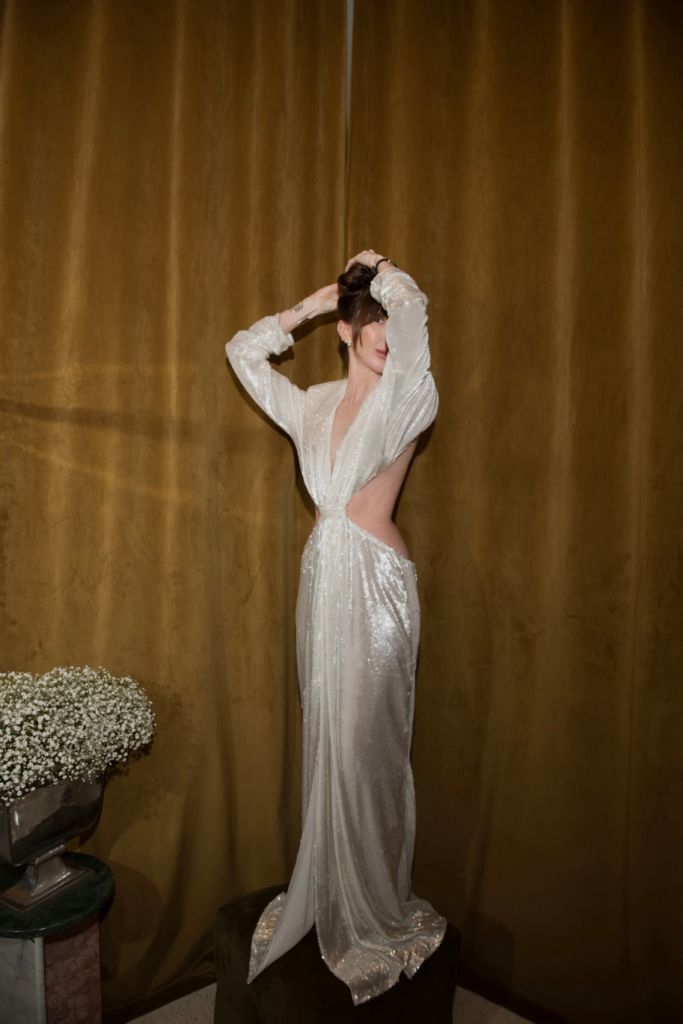
0711 emphatically maintains its production in Georgia. How important is the “Made in Georgia” label to you? How do you navigate the challenges that come with the imbalance between local production and global demand?
For 0711, “Made in Georgia” is far more than just a label- it is our identity. Maintaining production in Georgia allows us total quality control, a direct connection to the traditions of craftsmanship, and the ability to work closely with the people who actually bring the products to life. It is a multi-layered responsibility- economic, cultural, and social.
Of course, local production comes with its share of hurdles: the difficulty of scaling, the availability of raw materials, and maintaining price competitiveness in global markets. Imbalances arise when demand surges while production resources remain naturally finite. We navigate these challenges through three core principles:
Measured Growth (We never increase volume faster than we can guarantee the preservation of quality), Process Optimization (We implement technological improvements to streamline production without ever sacrificing its artisanal character), and Strategic Positioning (We present ourselves to the global market not as a mass-market brand, but as an authentic, niche, and high-value entity).
As a “Fashion Worker,” what do you find most challenging in your daily workflow- managing the logistics chain, keeping pace with global trends, or the constant pursuit of innovation with your team?
Fashion is one of the most volatile and high-risk industries, but for me, the greatest challenge isn’t a single specific process; it is the simultaneous maintenance of speed and quality. One minor disruption can ripple through the entire system. Keeping pace with global trends is essential, but blindly following them has never been my strategy.
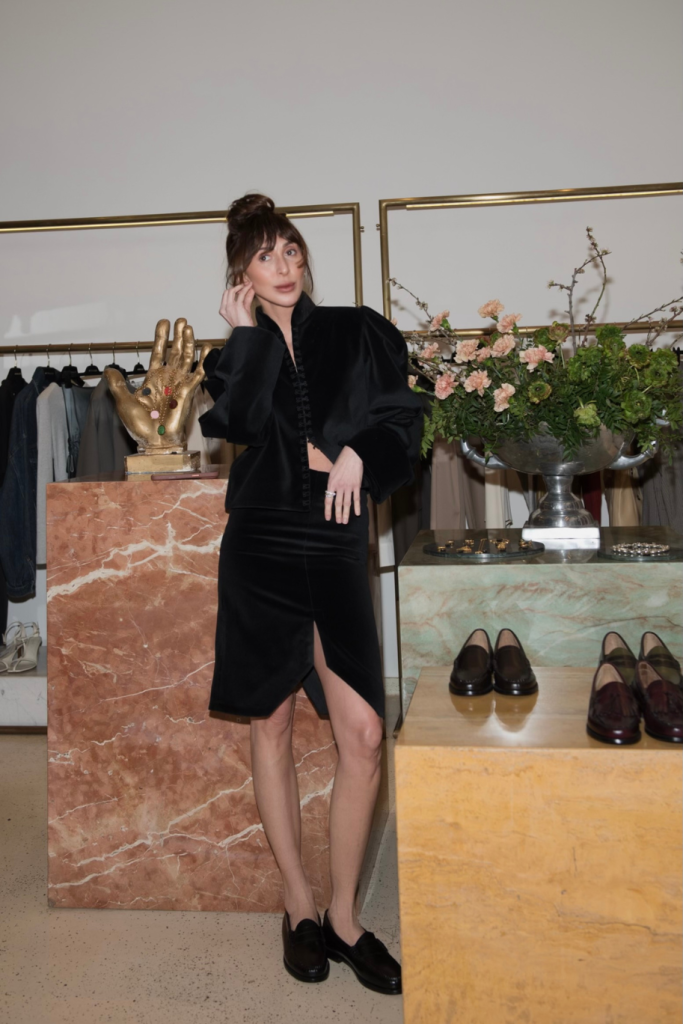
How do you balance your personal life and your work? What is your favorite way to recharge?
I don’t divide life and work into separate compartments- for me, they are a single, cohesive whole. Balance isn’t found in my calendar; it’s a feeling. When I sense that I’m reaching a point of burnout, I stop. I do what I love, so the lines often blur, but that is exactly why I make a conscious effort to find equilibrium. My guiding principle is energy management. If you distribute your energy correctly, time organizes itself. For me, the ultimate way to recharge is through peace: time with my daughter, mornings away from my phone, nature, travel, and silence. And above all—leaving space for myself, a space where I owe nothing to anyone.
INTERVIEW TATULI GVINIANIDZE
PHOTO SHOTA GOTOSHIA