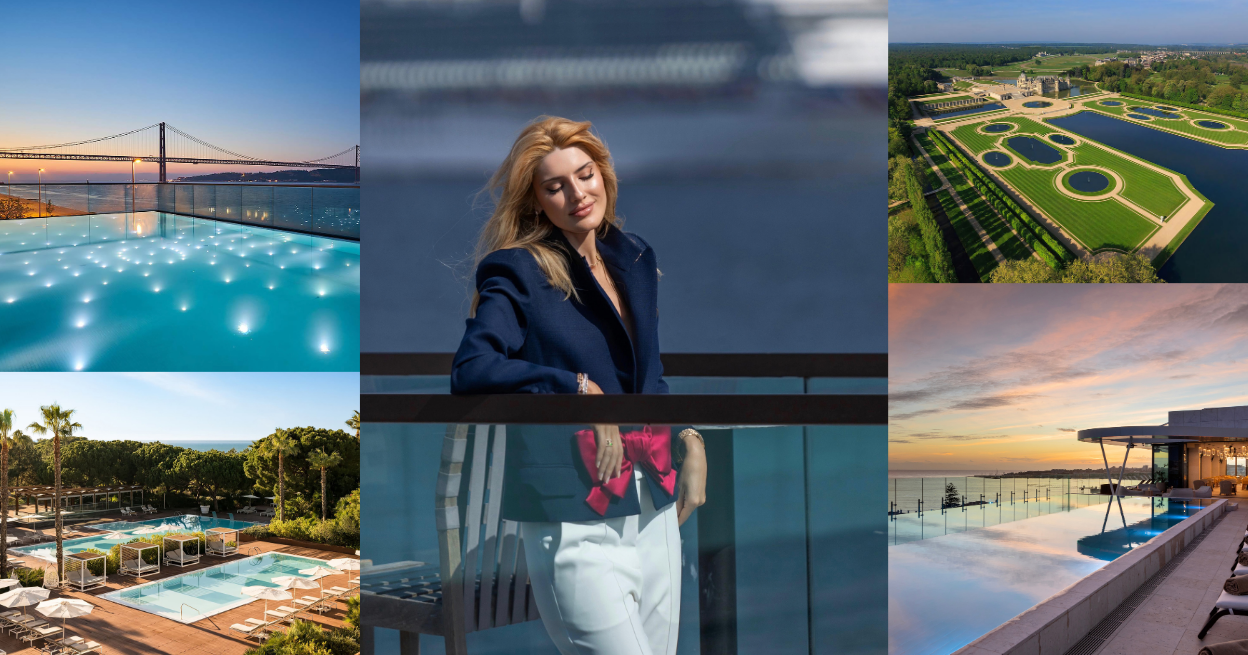
The first instinct while working on this story is to place Salome Gorgiladze inside the world she inhabits today: the terraces overlooking the Tagus, the choreography of a perfectly timed dinner service, the measured elegance and rhythm of hospitality at its highest level. Yet this would be a mistake, because her story does not begin in Lisbon. It begins much further East, in Georgia, within a governmental and diplomatic environment where international dialogue, protocol and culture were not abstract ideas but part of daily life and where hospitality existed less as etiquette and more as a form of identity.
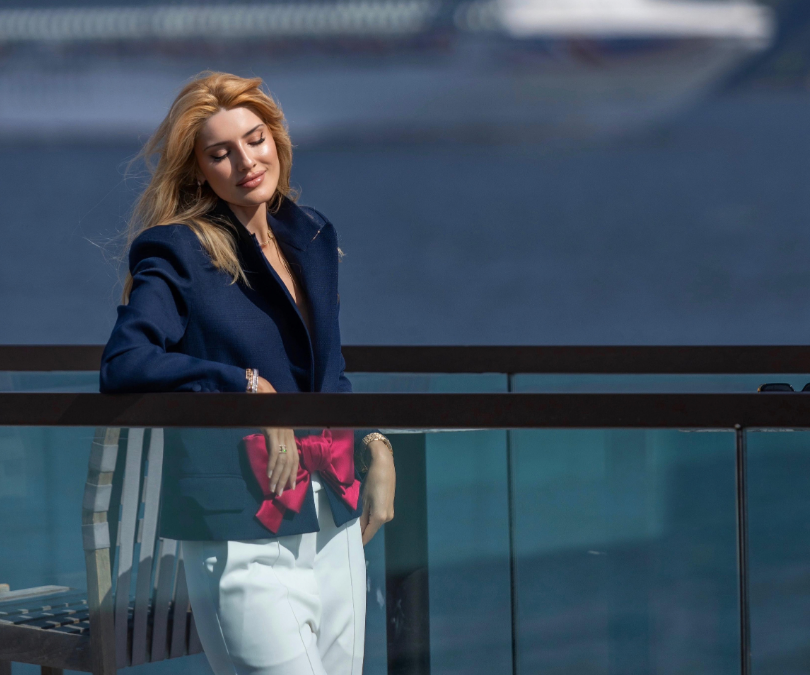
Cultural Memory and Connection to Homeland
For those unfamiliar with Georgia, it is difficult to understand the weight the table occupies within the national imagination. The supra, the traditional gathering led by the tamada, is not merely a meal. It is philosophy disguised as hospitality. Conversation carries the same importance as food; memory matters as much as celebration. One receives not because social convention requires, but because generosity itself becomes a cultural language. Looking at Salomé today, seated above the Tagus while discussing destination positioning and international lifestyle hospitality, one understands that this code never disappeared. It simply changed scale.
She speaks about her Georgian roots without sentimentality and without nostalgia. Georgia is not the place she left behind, it is the framework she carried with her while moving through Switzerland, international relations, psychology, diplomatic circles, institutions linked to the United Nations and UNESCO, the financial environment of global investment and eventually Portugal, where hospitality would become the territory at SANA Hotels in which all these experiences unexpectedly converged.
Reflection
From the outside, the transition appears unusual. Diplomacy rarely leads to hospitality. Hospitality rarely leads to strategic investment conversations. Yet when she explains the route, the logic becomes almost self-evident. Diplomacy, she argues, teaches observation before speech. It trains one to read context, silence, intention and nuance. Luxury hospitality works in much the same way. Guests do not always arrive knowing exactly what they are looking for, yet they respond instinctively to atmosphere, to the rhythm of a place and to those details that quietly shape memory. It is perhaps this capacity to move between visible and invisible layers that explains her leadership style.
A Female Figure in Portuguese Hospitality Leadership
SANA Hotels hospitality tends to be photographed through its surfaces: architecture, design, gastronomy, views, beautifully lit tables and destinations that promise escape. The reality behind those images belongs to another universe entirely: investment structures, strategic planning, long development cycles, teams and decisions that rarely become visible to the guests.
Salomé occupies that intersection with unusual ease, moving between aesthetic vision and business discipline while remaining one of the younger female figures associated with executive leadership within Portugal’s hospitality landscape.
Strategic Leadership
The subject of female leadership inevitably enters the conversation. Over the years, business publications and lifestyle titles in different markets have returned repeatedly to her perspective on the matter. She avoids ideological language and prefers something more pragmatic. Authority, she believes, does not require hardness; empathy does not weaken performance; emotional intelligence belongs as naturally in executive rooms as it does in diplomacy. The objective was never to imitate existing structures, particularly those historically designed by men, but to bring another vocabulary into them.
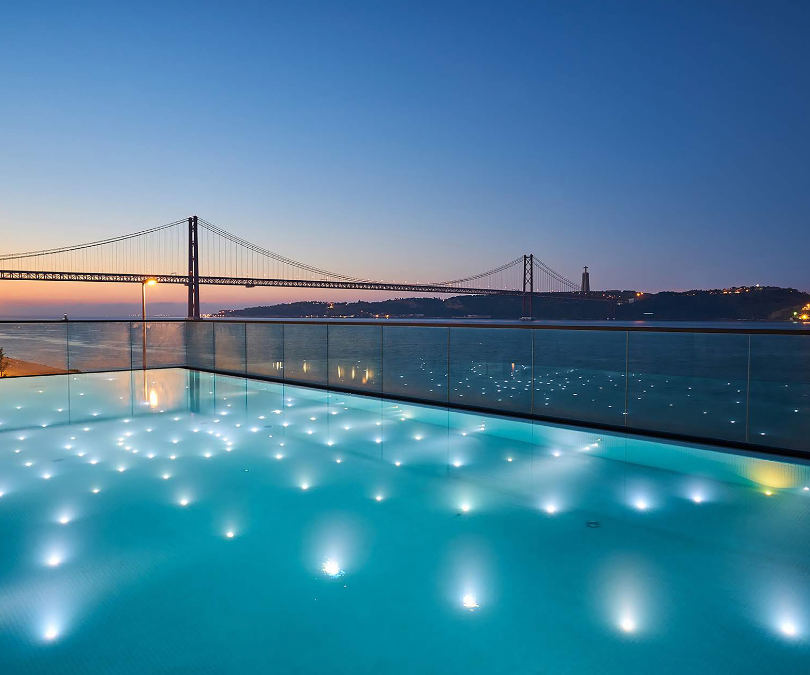
This becomes especially visible in Belém. Few districts in Lisbon combine history, symbolism and contemporary energy with the same ease. From SUD Lisboa, the river opens generously towards the Atlantic while the 25 de Abril Bridge draws a line across the horizon. Cristo-Rei rises quietly on the opposite bank and, nearby, the Tower of Belém, the Monument to the Discoveries and the Jerónimos Monastery remain as reminders that Portugal built part of its identity through movement, exchange and curiosity about the world.
It is difficult not to notice the parallel. Gorgiladze’s own journey also belongs to movement. Georgia to Switzerland, International institutions to luxury hospitality. And Portugal.
SUD Lisboa — A Social and Cultural Stage
SUD Lisboa became one of the places where these worlds found expression. More than a restaurant, more than an events destination, it evolved into a social and cultural stage where gastronomy, entertainment, architecture and lifestyle coexist. International personalities pass through it with relative discretion. Cristiano Ronaldo remains one of Portugal’s most powerful contemporary ambassadors, not only through sport but through the global projection of Portuguese identity.
Other connections belong to more unexpected territories. Earlier in life, Salomé studied within the same academic universe as Florian Picasso, grandson of Pablo Picasso and now one of the recognised names of international electronic music. These references matter less for celebrity value than for what they reveal about luxury itself.
Estoril — Translating Aristocratic Codes
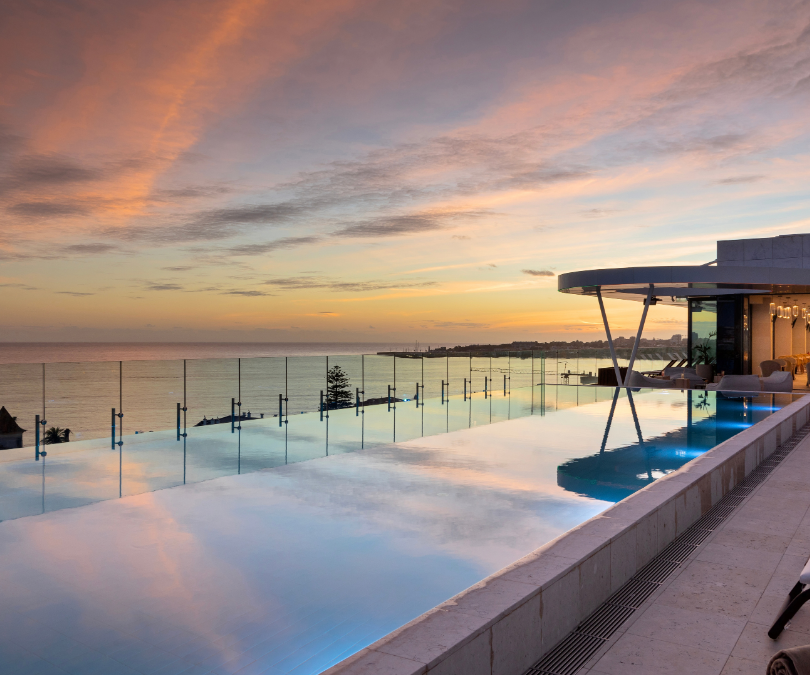
West of Lisbon, the narrative changes tone. Estoril occupies a curious place in European memory. During much of the twentieth century it welcomed royalty, diplomats, industrial families and exiled courts, becoming a quieter Atlantic counterpart to the more theatrical glamour of the Mediterranean Riviera. Even today, walking along its seafront or through its grand villas, one senses that elegance here was never designed to attract attention. It was designed to endure.
This historical layer makes the emergence of Evolution Cascais-Estoril particularly interesting. Rather than reproducing old aristocratic codes, the project translates them for a different generation — travelers moving fluidly between business and leisure, interested in wellbeing, social connection, design and flexibility. For Salomé, it reflects something larger happening across hospitality.
Algarve — A Geography of Silence
Further south, Algarve introduces another chapter. Comparisons with Saint-Tropez, Marbella, Monte Carlo or parts of the Italian Riviera inevitably appear whenever international audiences discuss Portuguese summer destinations, yet Algarve preserves something many luxury geographies have gradually lost: Space. Silence. A relationship with landscape that remains remarkably intact.
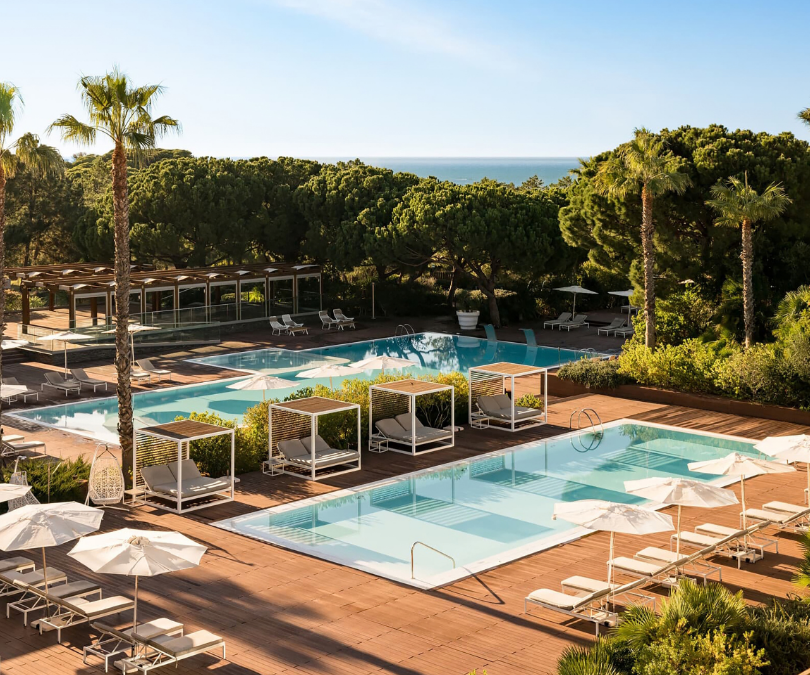
At EPIC SANA Algarve Hotel, overlooking Praia da Falésia, the experience becomes less about spectacle and more about atmosphere. Pine forests, cliffs and Atlantic horizons create a slower rhythm. Professionally, the region continues to influence her because it reminds her that sophistication often lives in simplicity: fish arriving directly from the morning catch, salt from Vilamoura, hidden beaches, family restaurants without choreography, places where authenticity remains stronger than presentation.
Travel as a Form of Professional Learning
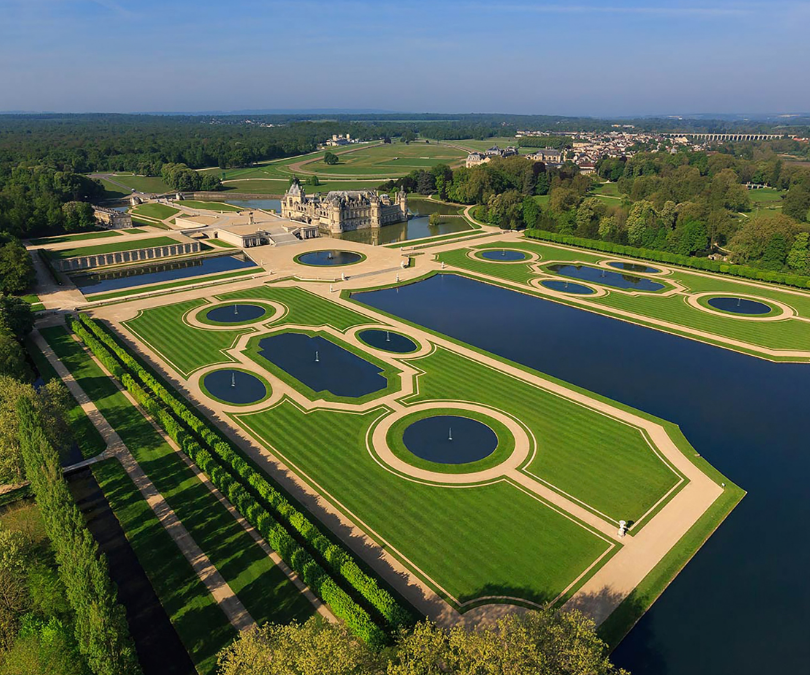
Away from executive responsibilities, travel remains one of her preferred forms of learning. Monte Carlo, Chantilly at Auberge du Jeu de Paume Hotel and other international hospitality references are visited not simply as destinations but almost as case studies. Great hotels interest her less for their visibility than for their rituals. She watches how guests are welcomed, how silence is handled, how atmosphere is built and how memory is created.
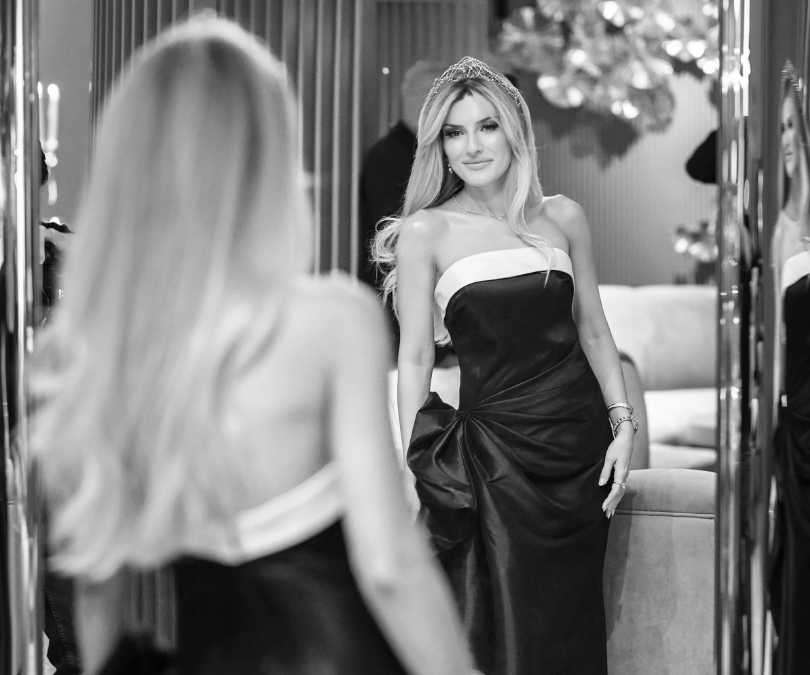
The question of glamour appears inevitably. Magazine covers. International circles. Exclusive events. Visibility. She answers differently. Humanization, empathy and compassion return repeatedly to the conversation. The interior world, she believes, eventually becomes visible on the exterior.
Redefining Luxury
When asked what luxury means today, she speaks about time. Time to sit. Time to travel. Time to observe. Time to share a table properly. Perhaps this is the thread that quietly runs through the entire story. Not Georgia alone, nor Portugal; not diplomacy, business or hospitality viewed separately, but the ability to inhabit several worlds while remaining entirely present in each of them.
Movement and a Personal Language of Hospitality
Salomé Gorgiladze speaks of movement not as departure but as accumulation, carrying the memory of the Caucasus into the Atlantic landscapes of Portugal and allowing each geography to expand the other. Between Lisbon — Belém and its dialogue with the river, the discreet elegance of Estoril and the slower rhythm of Algarve, she has built a language of hospitality shaped as much by cultural identity as by contemporary luxury.
It is a world where diplomacy informs leadership, lifestyle meets meaning and hospitality becomes, ultimately, an expression of belonging.