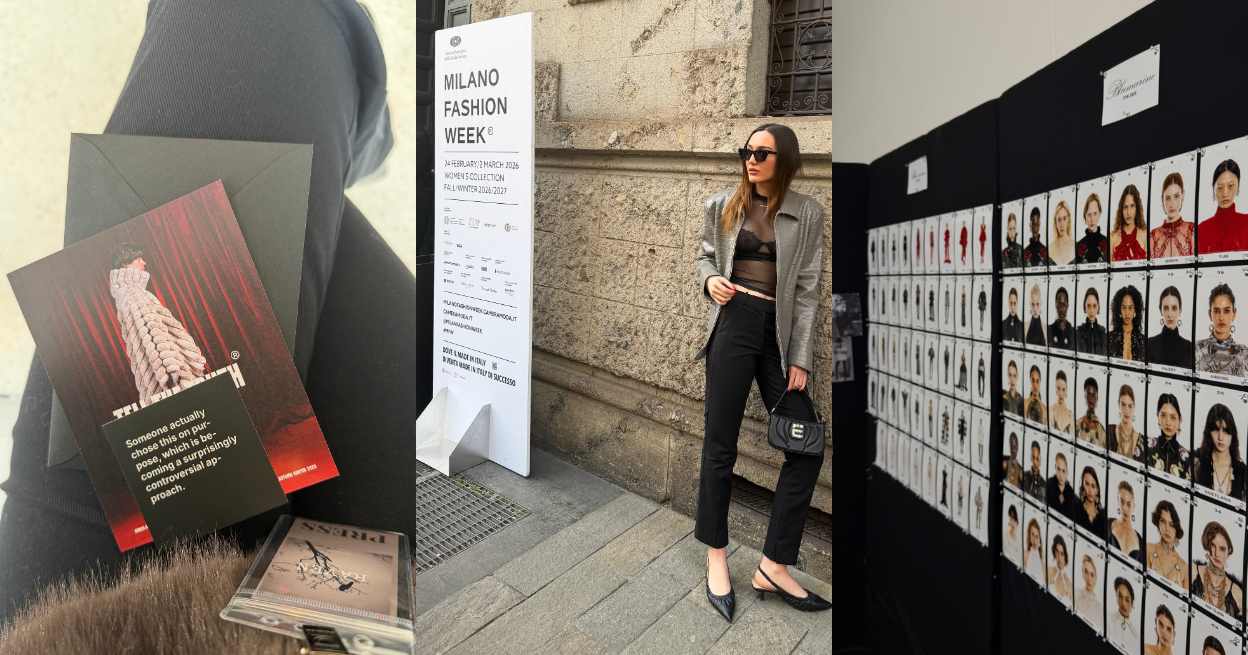
Milan is a unique epicenter of the fashion industry, where classic Italian elegance meets modern trends every day – both on the runway and on the streets. For Elene Dzidzishvili, fashion is much more than trends. It is a language of self-expression and cultural communication. In an interview with N13, Elene talks about how traditional Italian elegance transforms into modern experiments, what really happens behind the scenes where cameras rarely reach, and which essentials help her keep up with the intense rhythm of fashion week. She also shares her personal impressions of the season’s key shows and speaks about her own style, which always creates a distinctive narrative.
1. What was Milan Fashion Week like this season? What kind of mood could you feel in the city during the week
This season, Milan Fashion Week felt especially dynamic and energetic. The city had an incredible creative rhythm – it almost felt like all of Milan had turned into one big runway, where classic Italian elegance blended naturally with modern trends.
2. How difficult was it to create high-quality content during such a busy fashion week?
It is quite an intense and demanding process because everything happens very fast. On one hand, you want to fully experience the shows, meetings, and the atmosphere of the city. On the other hand, you need to present all of this to your audience in a clear and meaningful way. For me, quality is always more important than quantity. I want my content to be more than simple documentation – it should feel like a carefully crafted visual narrative.
3. In your opinion, what will be the main trends for the next season?
The next season will be all about contrasts. On one side we will see strong, structured silhouettes and precise tailoring. On the other side – sensual fabrics and fluid shapes that focus on movement. It is clear that the industry is returning to its roots and its own DNA. Brands are trying to highlight their authentic identity more than ever.
4. Can you remember the most memorable look you saw on the runway?
One of the most unforgettable looks for me came from Demna’s Gucci collection. It was a black oversized puffer jacket with a dramatic fur collar that gave the silhouette strong visual volume. It was balanced with slim black trousers and the brand’s signature red-and-green belt. Large sunglasses and dark, accentuated makeup gave the whole look a cinematic and very powerful character.
5. Which fashion house impressed you the most this season, and which brand reflects your personal style the best?
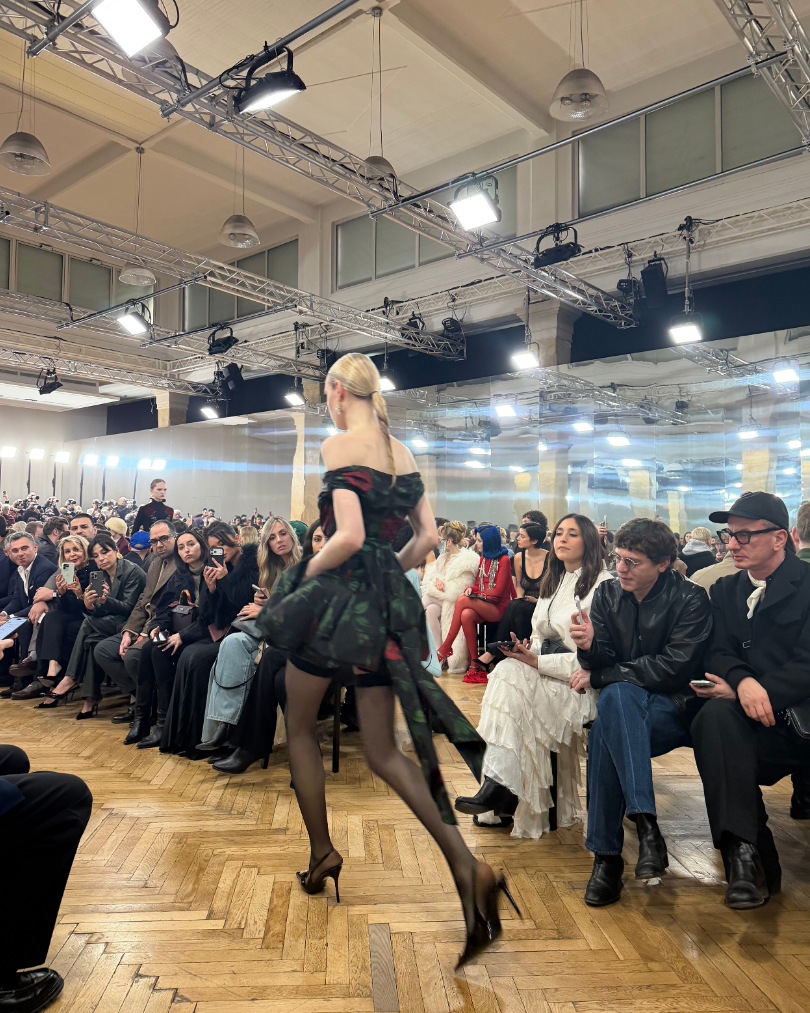
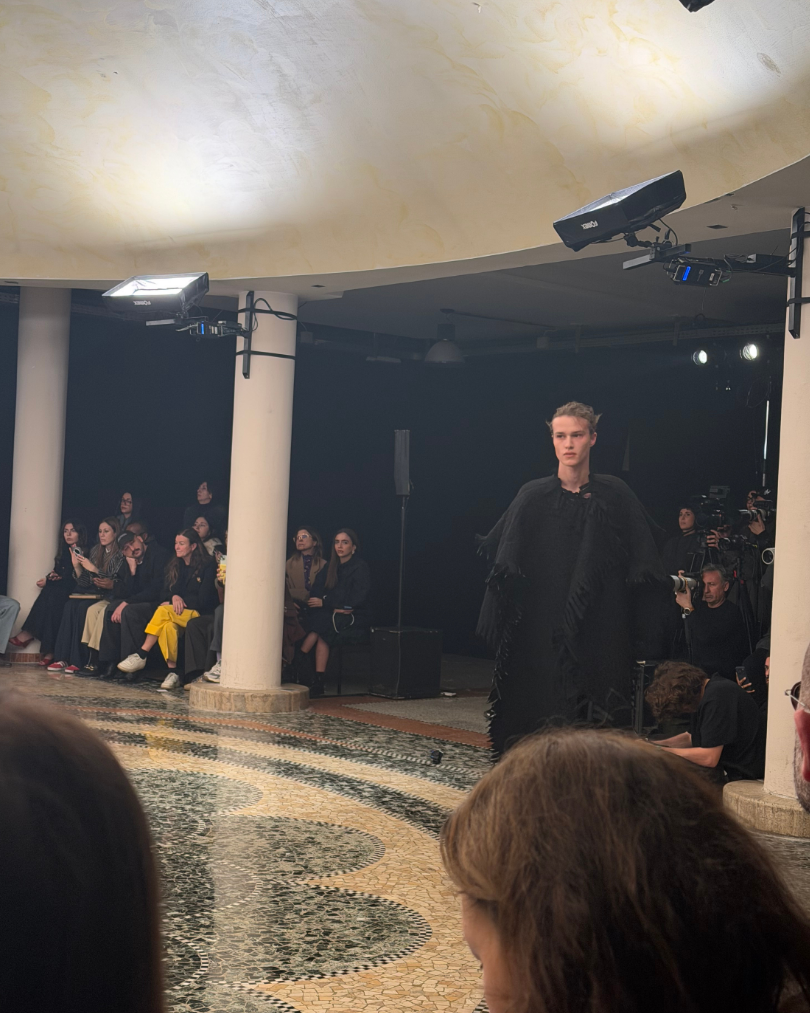
My favorite this season was Prada. I really liked their conceptual approach. Only fifteen models appeared on the runway, and they changed their looks during the show. This turned the presentation into a kind of performance, where the focus stayed completely on the silhouettes and the idea behind them.
As for my personal style, I feel closest to the aesthetic of Saint Laurent. It is a brand that creates an impressive balance between minimalism, strength, and sensuality. Clean tailoring and a monochrome palette represent modern elegance for me.
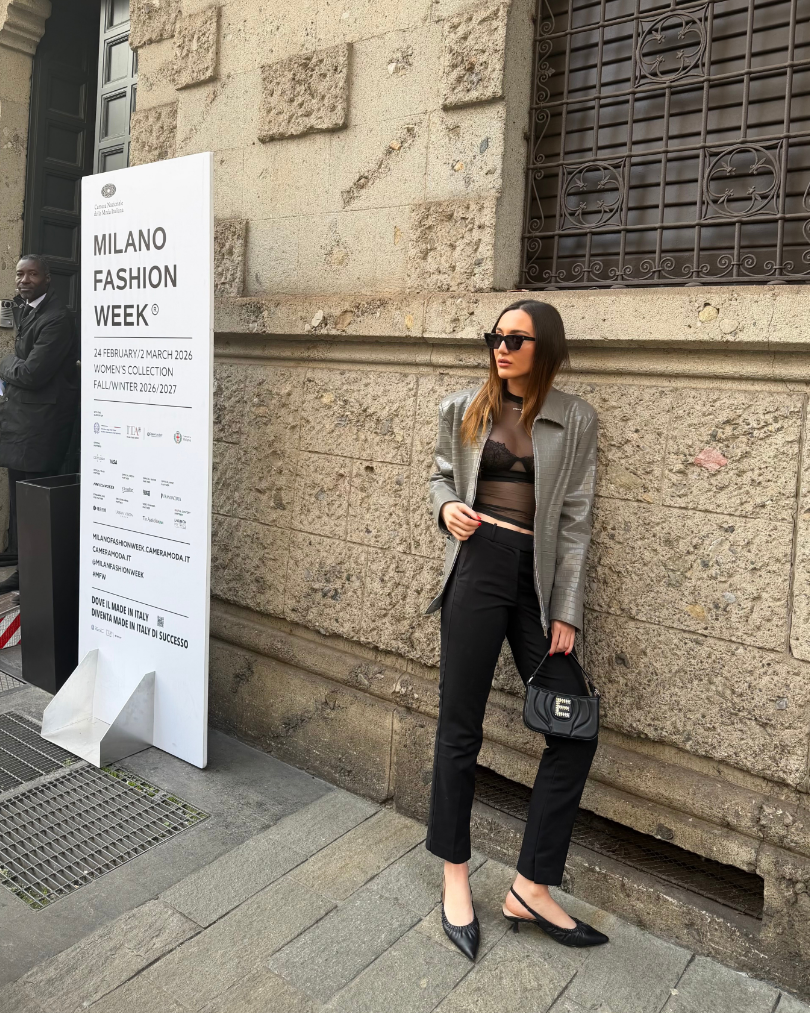
6. During fashion week, the streets of Milan can be just as interesting as the runway. How did you choose your looks for each day?
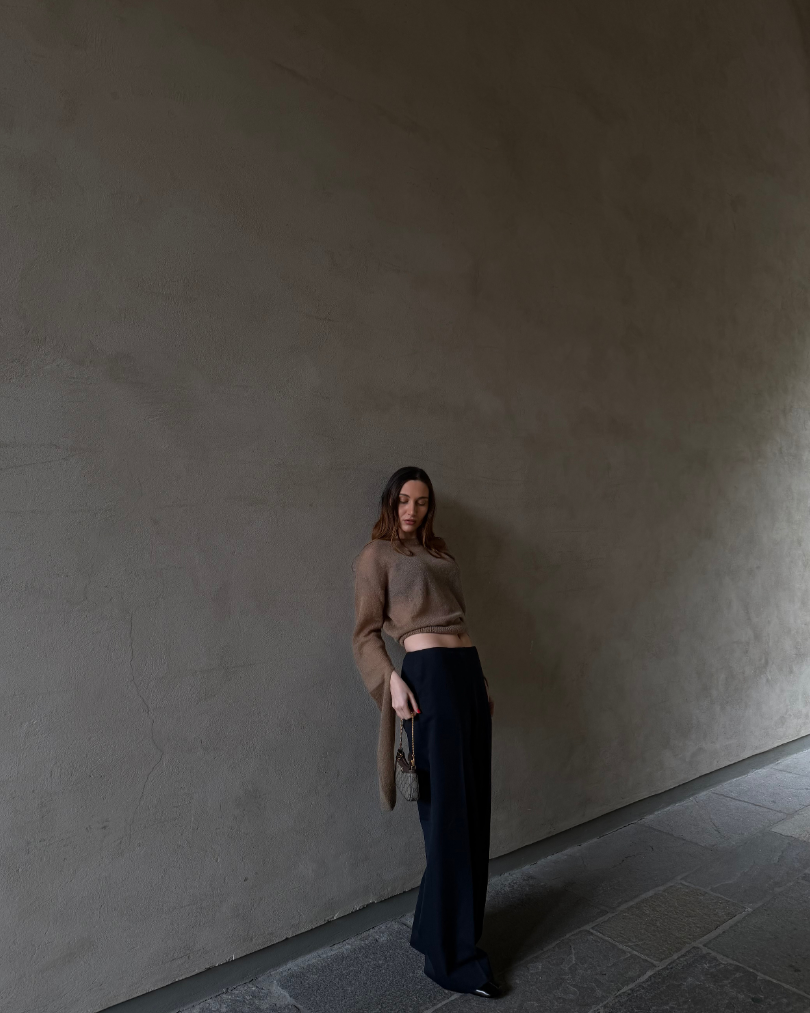
For me, clothing is a form of communication. I tried to make each daily look functional, but also reflective of the environment where I was spending that day. Most of my outfits were a mix of classic pieces and modern details.
7. Being backstage at David Koma’s show must be a special experience. What happens there that the audience cannot see?
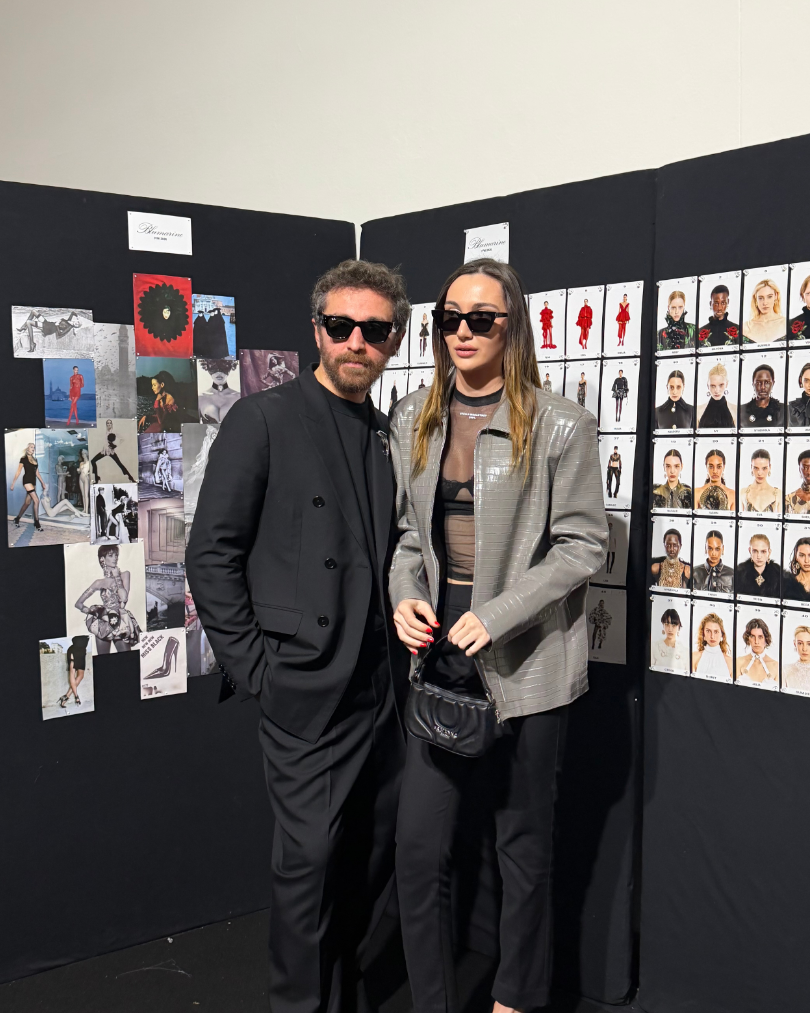
Backstage is organized chaos – a completely different world. While the audience watches a perfect show that lasts only a few minutes, behind the scenes a large team is working with incredible precision. The atmosphere is full of adrenaline but also deep concentration. Everyone – from makeup artists to models – is focused on the same goal.
8. How would you describe Galib Gassanoff’s collection this season? What made it stand out?
Galib Gassanoff is always interesting because his collections reflect a strong personal vision. This season also had a clear concept. The silhouettes were dramatic but very thoughtful. What made the collection stand out was its balance – it managed to stay elegant while still feeling experimental.
9. During fashion week, what are the three things you always keep in your bag?
First, of course, my phone – it is the main tool for both content and communication. Second, a snack, because with such a busy schedule there is rarely time for lunch. And third, sunglasses. At fashion week they are not only practical but also an essential style element.
10. What are your future plans? Are they connected to the fashion industry?
My future plans are very closely connected to the fashion industry. Right now my main focus is developing my own creative vision and working on ideas that do not simply follow trends but create their own narrative. Today fashion is no longer just about clothing – it is a cultural language. In the future, I want to be part of projects that express this language in a more modern, interesting, and influential way.
Interview: Mariam Bekauri