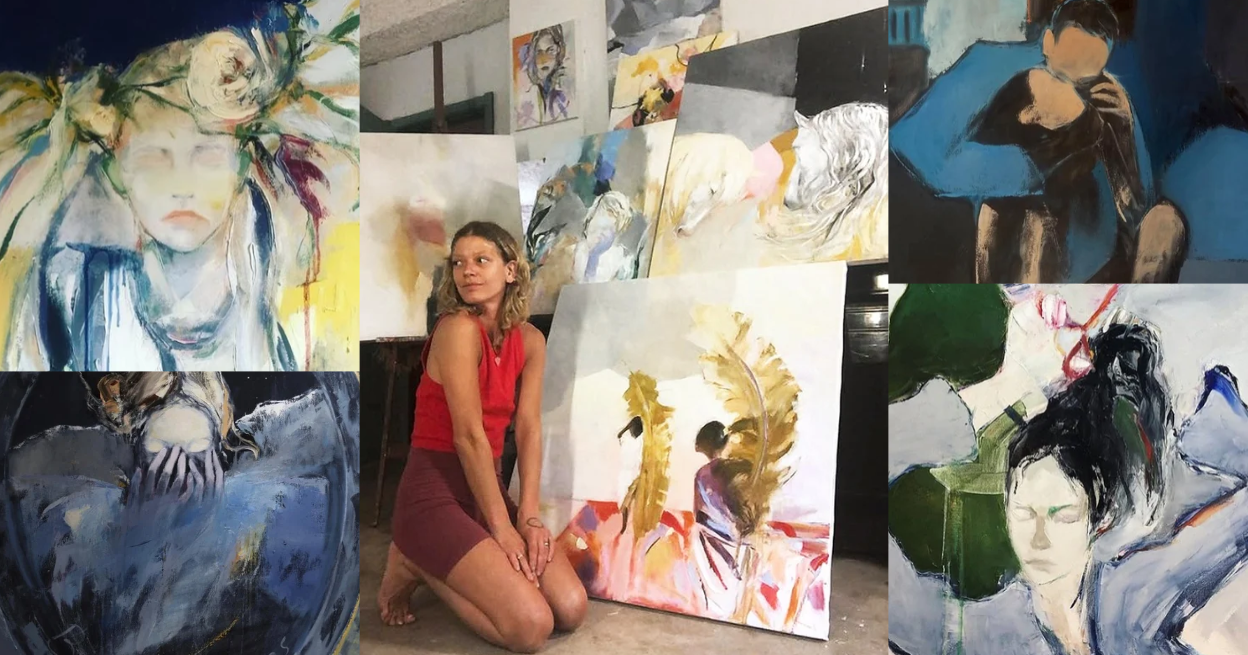
How do pain, a longing for freedom, and the search for an ideal world translate onto canvas and into a palette of colors? In today’s creative industries, preserving one’s artistic signature while simultaneously pushing boundaries is one of the greatest challenges an artist can face. Yet when the process is guided by intuition and continuous self-reflection, the outcome is always authentic.
This edition of the ART section features painter Nino Chabradze, who speaks about the social responsibility of art, the feminist wave, the most important lessons learned from her mentors, and the significant experience gained through the large-scale platform of the Tbilisi Art Fair.
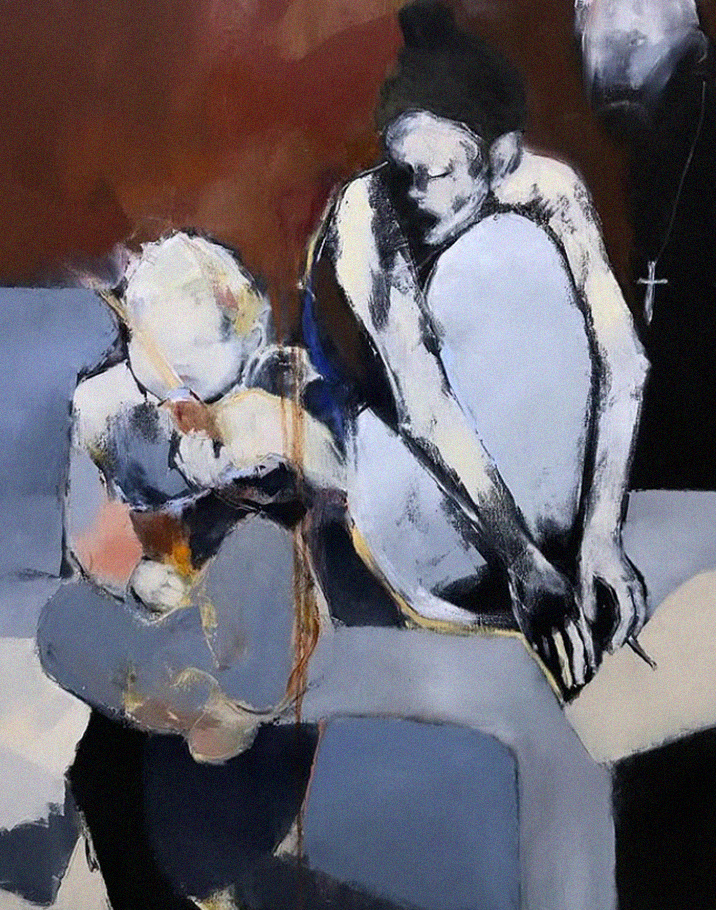
Art is the language of the subconscious. What does your own subconscious reveal to you most often through your brush?
Yes… Art is absolutely the language of the subconscious—it frequently gives voice to the things we simply can’t put into words. Even as a young child, I knew I needed “something more.” My mind was a constant blur of thoughts and vivid imagination, and I had to find a medium to translate my fears, dreams, and aspirations. In a way, it’s a game you play with the universe—an ambitious one, at that. It’s a game called “I am going to change the world”.
When you stand before a blank canvas, do you feel like you’re the one in control, or does the painting dictate where to go? Where is the line between your conscious control and pure intuition?
The moment you dive into a painting, time just stops, and you lose yourself completely in the process. For me, it’s always been about the journey rather than the destination. You might start with a specific concept, but then you veer off course entirely. A tiny, unexpected fragment appears on the canvas, whispering that you should have been moving in a completely different direction—and just like that, the whole piece shifts. Honestly, I think it’s always better to go with the flow than to try and force control. To create something truly remarkable, you need the audacity to just improvise.
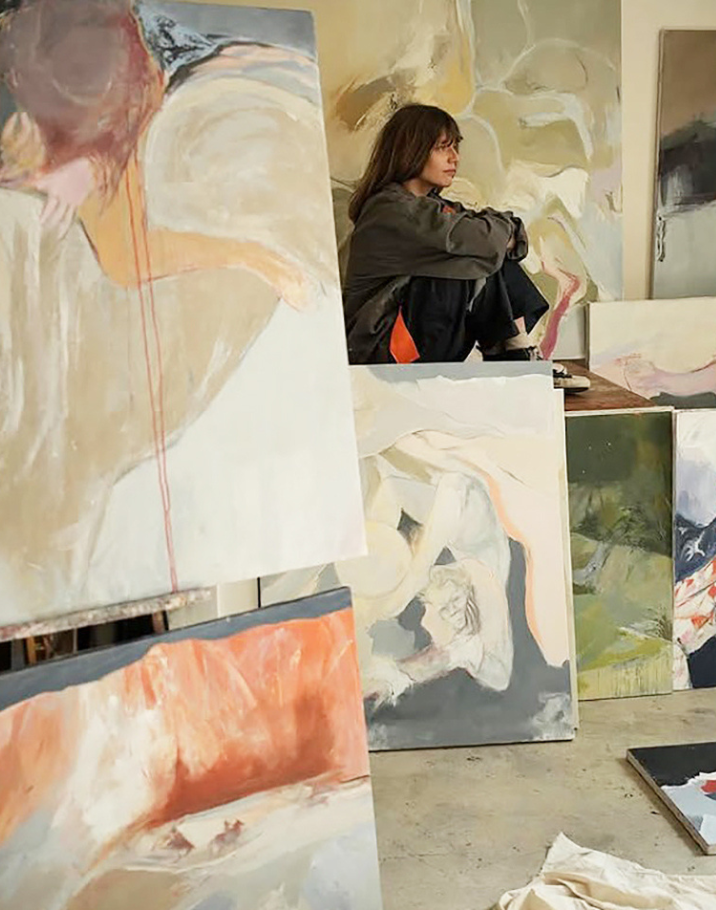
Psychoanalysts often argue that art is a sublimation of an artist’s traumas or unspoken desires. Would you say your work reflects more what wounds you, or what you long for and hope to discover in the outside world?
At various stages of life, it serves different purposes. But self-reflection is essential — it’s a constant tension, an ongoing examination of oneself and of the relationship one has with the world around them.
Is there a particular archetype, character, or symbol that unconsciously recurs throughout your paintings? What part of your personality do you think it reveals?
I often return to the sea, the earth, and nature in general. I’m also drawn to painting imagined cities. For me, the sea symbolizes freedom; the earth, motherhood; and those fictional cities represent the search for an ideal world.
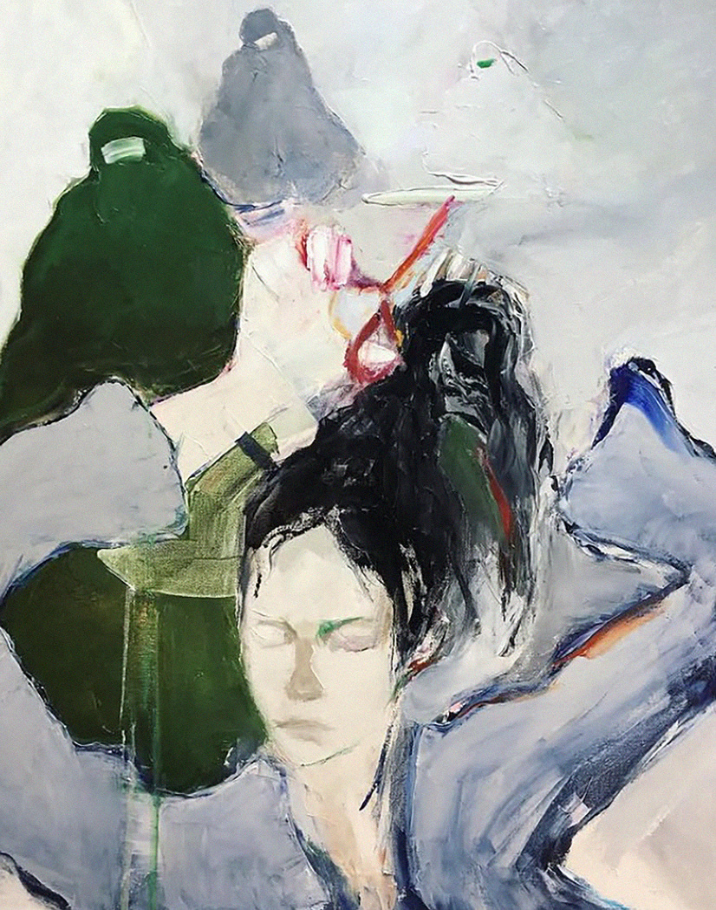
Have there been moments when your own work frightened you because of its overwhelming emotional nakedness?
There are moments like that in art. You finish a piece, recognize that it has genuinely turned out well, and yet some inner impulse still urges you to destroy it. It has happened to me only rarely, but it has happened. I would describe it as a kind of crisis born of perfectionism. I have always demanded the absolute maximum from myself, and that persistent sense of dissatisfaction is probably my greatest driving force.
People often say that great art is born out of suffering. In your experience, is emotional discomfort or pain necessary for an artist to create something meaningful, or can peace be just as productive?
It would be wonderful if suffering did not exist, but that is a utopian wish — almost absurd in its impossibility. I think artists are, by nature, deeply emotional people, and that emotional intensity inevitably finds expression through different mediums. Chaos, suffering, happiness — all of it has to be given shape, sculpted into form. And once it finally takes form, what follows is a sense of lightness, of release.
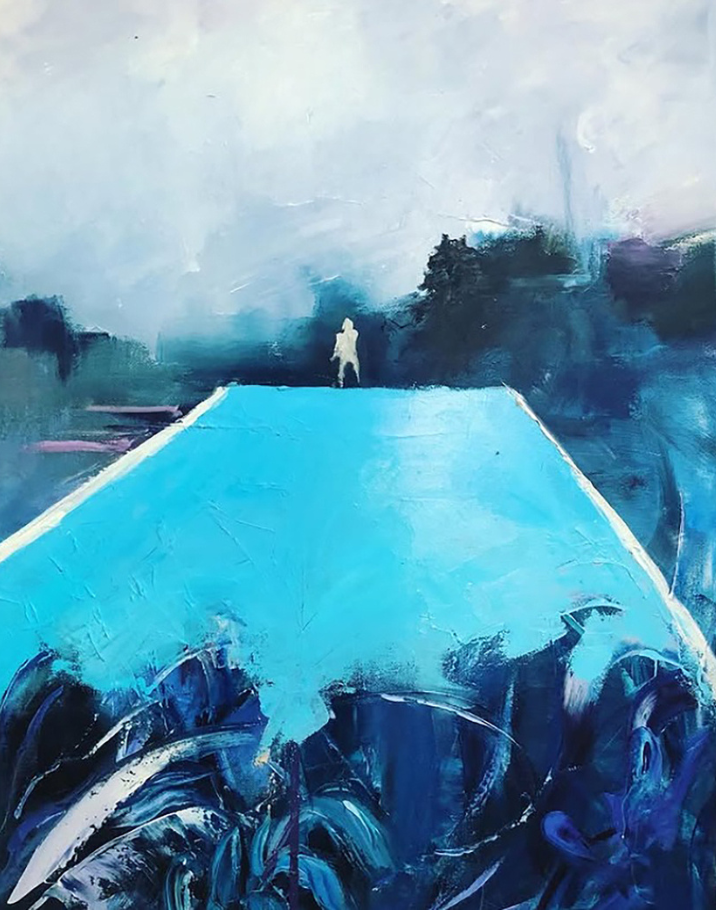
If you look back at your body of work, how has your color palette evolved through different stages of your life? Which colors do you associate with your most turbulent and your most harmonious periods?
I’ve walked a very long path — and at every stage, a new color and form entered my work. The search for color has always felt like a kind of magic; I am never satisfied with the palette I already have, I am constantly drawn toward discovering new tones.
Is there a risk that excessive detail can diminish a work of art? How do you recognize the moment when a painting is complete — when to put the brush down?
That is a very interesting question. Anyone can learn to paint, but achieving that sense of restraint requires something more — thought, emotional intelligence, self-irony, risk, courage, and an enormous amount of practice. I was fortunate to have excellent teachers. I studied painting with Gia Javakhishvili; beyond giving us immense freedom, he used to tell us: “One day, one painter.” For me, no day passes without discovering at least one new artist and entering their world. It has become more than a habit — it is an inner necessity, a form of visual and spiritual nourishment, without which my daily life would simply be unimaginable.
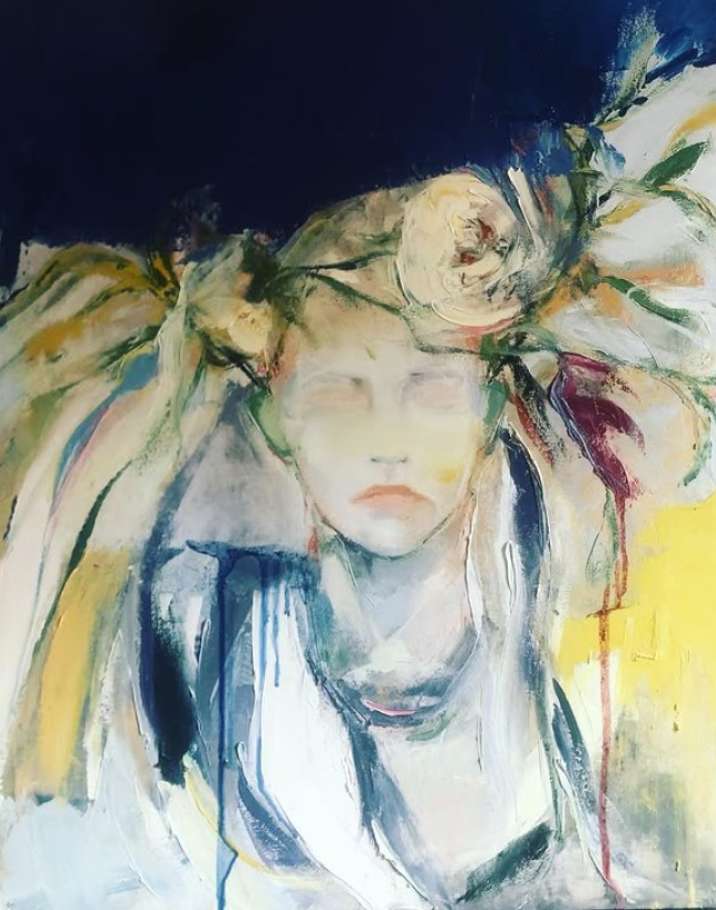
There is a view that art should stand above politics and serve an eternal aesthetic ideal. Another argues that apolitical art is an illusion, and even silence is a stance. For you, is art a tool of social protest, or a refuge from political chaos?
Both. It is impossible to step aside completely and remain untouched by politics. I have created a number of works that engage directly with social and political themes.
When a country or the world goes through intense political shifts, how does your daily life in the studio change — do you feel a social responsibility to respond artistically to historical moments or pressing issues?
Of course my daily life changes. We live at such a pace that it is impossible to reflect every issue in one’s work. At times, I feel a sense of unease when I am unable to respond to urgent political events.
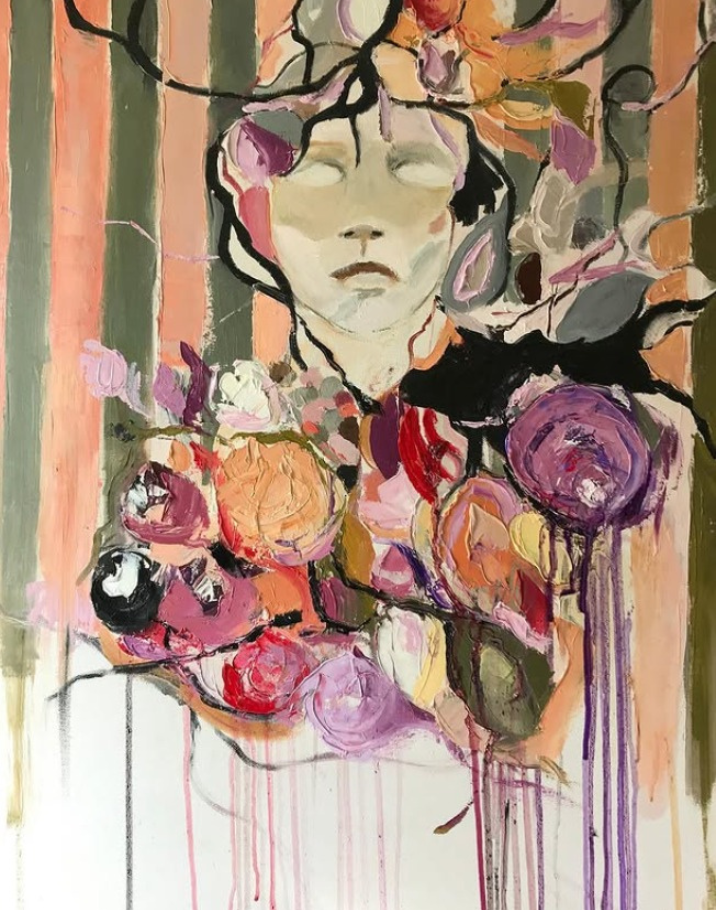
Art history has been written for centuries through a male perspective, where women were often reduced to muses or objects of aesthetic pleasure. In your view, what has the “female gaze” brought into art? How does the representation of the female body, sexuality, and emotional world change when it is depicted by women themselves?
Women artists and writers have managed to portray women from within — to present female experience from an internal perspective — so that the female body is no longer reduced to a purely aesthetic object, but is instead understood as a lived, subjective reality. For example, Louise Bourgeois transformed family trauma, motherhood, and memory into sculptural form.
Today, significant attention is being given to forgotten women artists who, for many years, remained in the shadow of men. Do you see this process as a restoration of justice? Where do we draw the line between genuine artistic merit and ideological necessity?
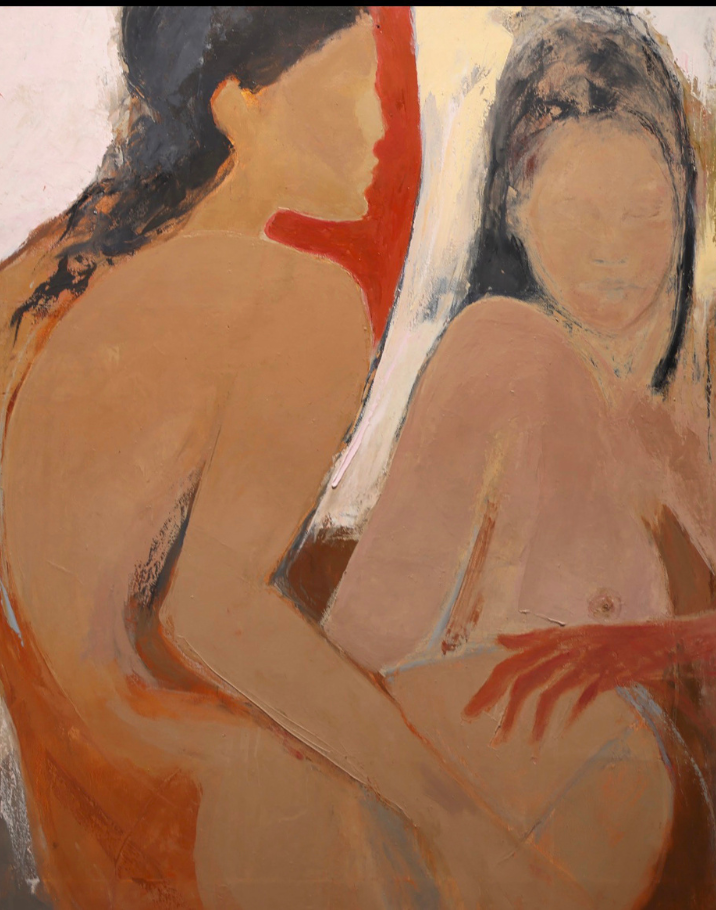
I am not in favor of artificially elevating this topic or granting advantage on the basis of gender—every talented individual should have equal access to the field. However, it is undeniable that the patriarchal world has been unforgiving towards women. In that sense, the rise of a feminist wave in art feels logical. The central theme of my upcoming exhibition is also the woman. I dedicated one painted portrait to Iranian women—it is now held in a private collection.
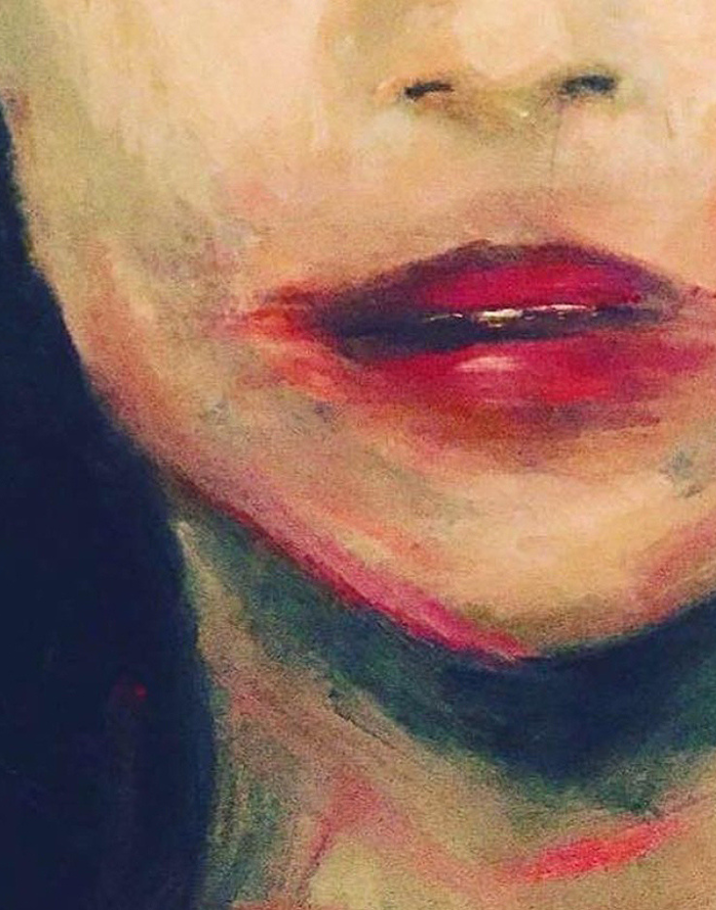
Have you ever experienced a moment when a viewer interpreted something in your painting that you had not consciously intended during the process of creation—and did that interpretation reveal a new perspective on your work or even on yourself?
This happens very often. People recognize themselves and their own stories in my paintings. I most enjoy listening to these interpretations—sometimes they even feel more compelling than my original intention or concept.
In today’s world, where visual information flows towards us in an unstoppable stream (social media, artificial intelligence, fast content, kitsch), what is the main challenge for a contemporary artist: to capture attention or to preserve authenticity?
It is very difficult in this era to remain true to oneself—to stay authentic. For an artist, it is essential to develop a personal style, to work across all active platforms, and to continuously push boundaries.
How did you come to participate in Tbilisi Art Fair?
I went through the standard procedure: I submitted my works, and they were selected. Working with them is very comfortable—they value and respect artists, and through mutual professionalism, important projects are created.
How did you select the particular series or works you presented at Tbilisi Art Fair? Did you feel the need to develop a specific concept that would respond to an international context and contemporary art trends?
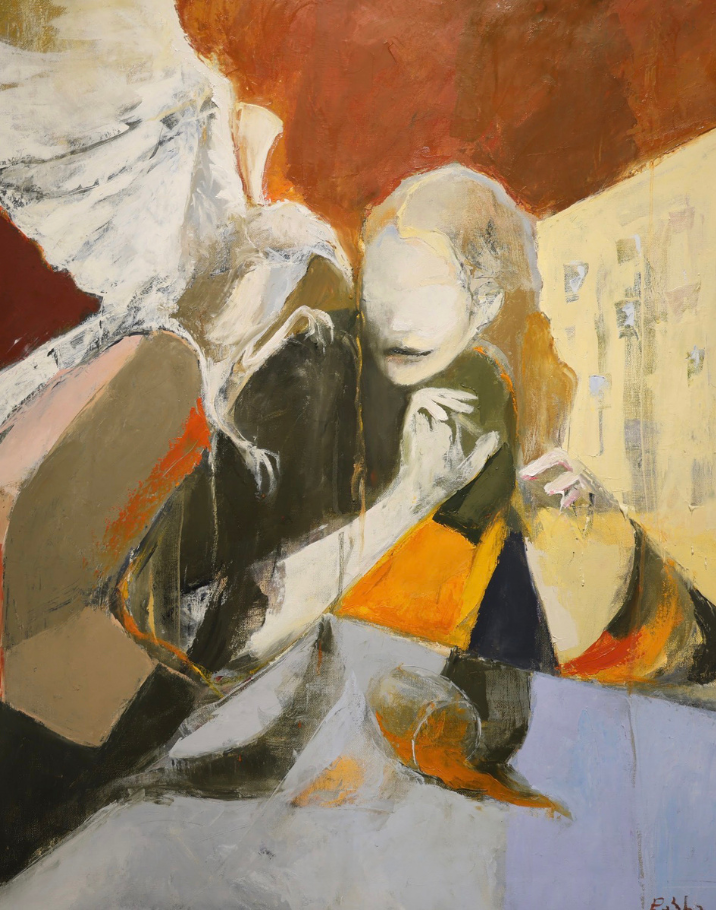
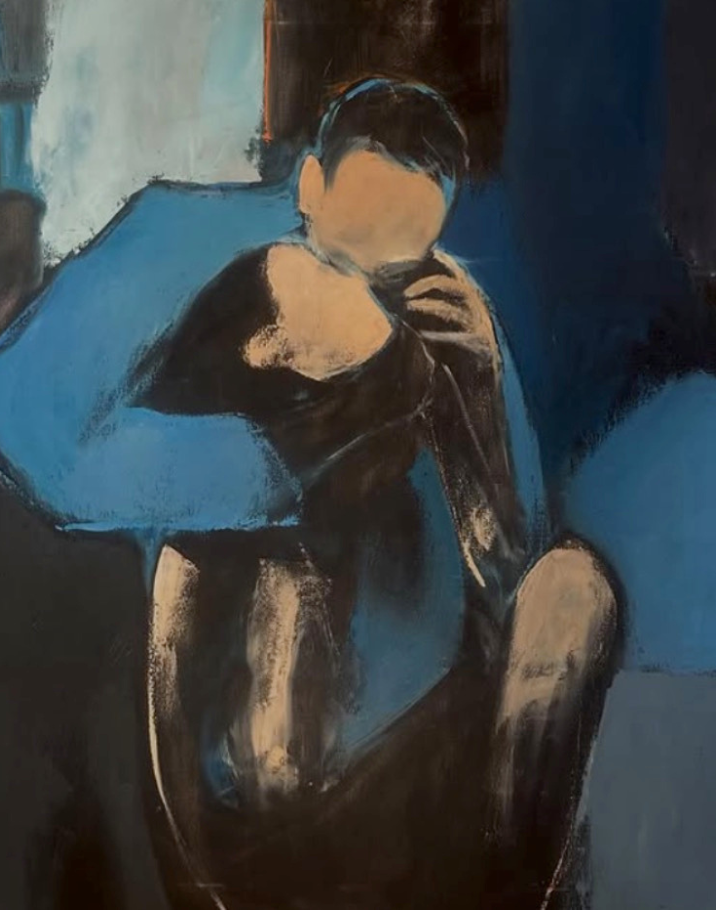
This series is from my most recent exhibition, which was entirely dedicated to an exploration of the subconscious. It represents a transitional phase in my life, and I tried to bring together and summarize the path I have taken so far.
Being surrounded by so many talented Georgian and international artists naturally creates a moment of comparison. What did you learn about yourself in this environment? Did you feel that your voice and artistic language are fully competitive on such a large scale?
I am glad to find myself among such talented people, but at this stage it is difficult to evaluate the outcome. Time will tell. It is, in any case, a valuable experience, and I am looking forward to the response.
How would you assess the impact of Tbilisi Art Fair on contemporary Georgian art?
If I am not mistaken, today Tbilisi Art Fair is the only large-scale, truly functional platform in Georgia that gives artists the opportunity to present and sell their work. I can only express gratitude to the organizers for creating such a space. At the same time, this reality also shows how great the demand is for similar platforms. I would hope that more alternative spaces will emerge in our country—platforms that connect artists with collectors in a more diverse and sustainable way.
INTERVIEW: TATULI GVINIANIDZE