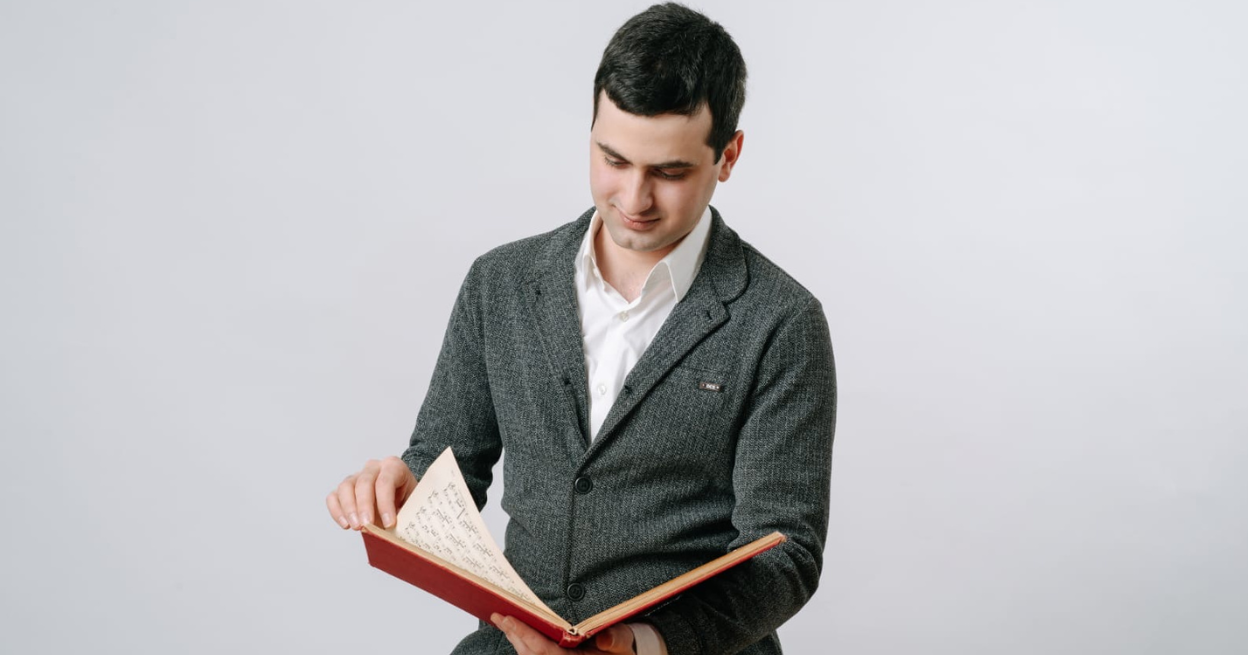
A triumph at the Maria Canals Competition, studies at Juilliard in New York, and a contract with one of the world’s oldest music agencies – this is only a small part of what has shaped Sandro Gegechkori into one of the most interesting young figures in the international classical music scene at just 24.
Sandro Gegechkori was born in Georgia in 2000. His musical journey started early and quickly moved beyond local borders. Prizes won on prestigious stages in Vienna, New York, Barcelona, and other cities brought him international recognition. He completed his master’s degree at The Juilliard School, studying with Professor Julian Martin, which helped develop a more refined and wide-ranging performance style.
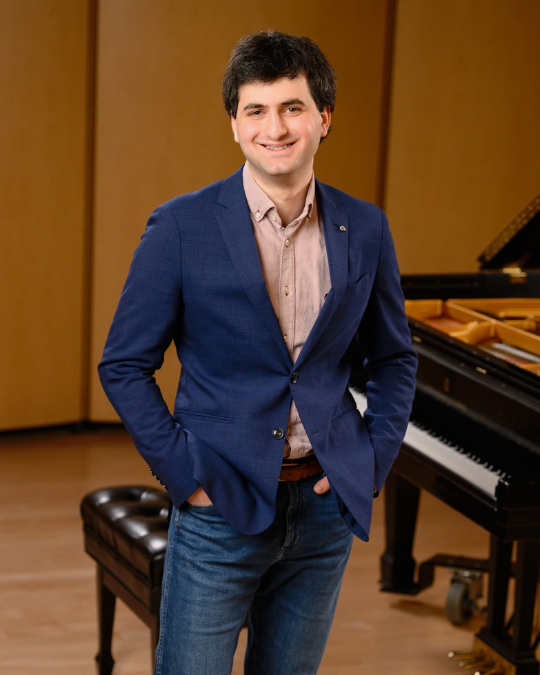
In an interview with N13, Sandro speaks about his path – from early childhood impulses to international recognition. He explains why today’s pianist needs a sense of marketing, how Georgian musical identity becomes part of his repertoire, and why performing at home still feels like the biggest responsibility.
Sandro, your career started at a very young age. What was the first impulse that made you choose the piano, and did your environment influence you?
A serious connection with art doesn’t just appear out of nowhere. Even though my grandmother was a pianist and spent years teaching generations of musicians, my mother wanted me to try different fields. I remember going to language classes, sports, dance, and music at the same time. But when I won my first children’s piano competition, my interest in music – especially piano – became clear. That was the moment I started to see it as a profession and a responsibility. Over time, it became an essential part of my life. I grew up in a very warm and supportive environment, where every member of my family encouraged me and helped me set new goals.
You studied at one of the world’s leading music schools. What was the most important lesson you learned at Juilliard?
For many, Juilliard feels like an impossible dream. It not only helps you grow professionally but also gives you direct access to world-class musicians. Through their advice, you refine your performance in a very specific way. Every moment spent with my professor, Julian Martin, was a source of inspiration. Living in Manhattan, between Juilliard and the Metropolitan Opera, is a kind of luxury – it creates new ideas and ambitions that you later work hard to achieve. In the end, all of this is for one goal: to offer the best possible result to the audience.
You’ve won many awards. Which one was the most emotional or important for your career?
It’s difficult to choose just one, just like it’s hard to name only one favorite composer or artist. Every success had its own role. But I have to mention the first prize and 25 special awards at the Maria Canals Competition in Barcelona. That victory pushed me to compete with myself and made me realize that you can’t stay in one place. It opened the door to solo concerts in major halls, recording my first album, and traveling across different cultures.
Your artistic image is quite diverse. How important is it for a musician to be part of modern cultural processes, not only the academic space?
Today, every detail matters. The audience no longer comes only for good performance. A pianist should not be limited to playing what they like. It’s important to think about the concept – how composers connect with each other and how the concert title reflects the program. These details are part of marketing and help bring new audiences. So beyond performance quality, a musician needs charisma and should think about visibility too. It’s part of being relevant today.
You’ve performed in many legendary halls. Is there one where you felt most comfortable?
I can’t speak for others, but for any performer, the hall matters – acoustics, instrument, size. Still, in classical music, the audience is the most important. Performing in Georgia has always been connected with strong emotions. Georgian listeners are very professional and also quite strict in their judgment. That makes performing at home a double responsibility. Of course, audiences in Spain and the Netherlands are also special. Palau de la Música and the Concertgebouw are halls I’m truly proud to have performed in.
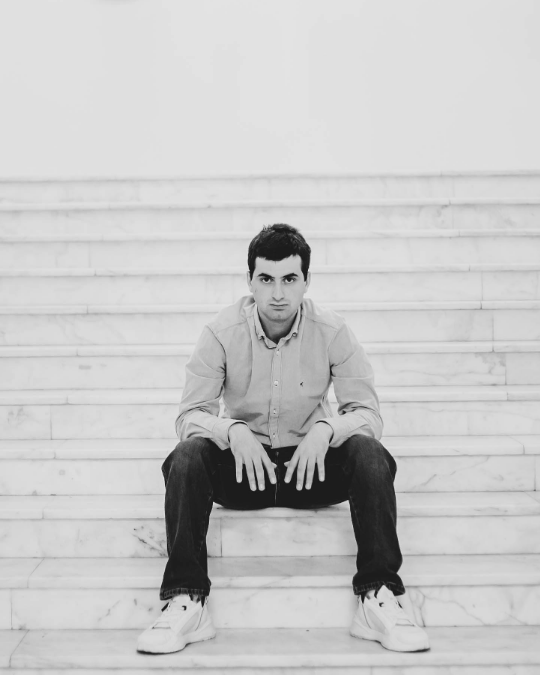
Your solo album includes Bach, Liszt, Rachmaninoff, and your own improvisation on Georgian melodies. How important is it to present Georgian identity on international stages?
Sometimes I try to look at Georgia from the outside, and the more I think about it, the more I realize how unique it is. We have such a rich culture that we can stand next to any nation with confidence. But historically, we didn’t always have the chance to be in the global spotlight. I believe it’s the mission of every Georgian to promote our country through their work. That’s why I included an improvisation on Georgian themes in my album alongside Bach and Liszt. The album Ad Infinitum is now available on all major platforms.
You travel a lot during the year. How does your program change when you perform at home?
It has become a tradition that at the end of each concert, during the encore, I play a Georgian piece – either classical or popular. The audience expects it. After a dramatic program, they wait to hear melodies by composers like Lagidze, Kancheli, or Kvernadze.
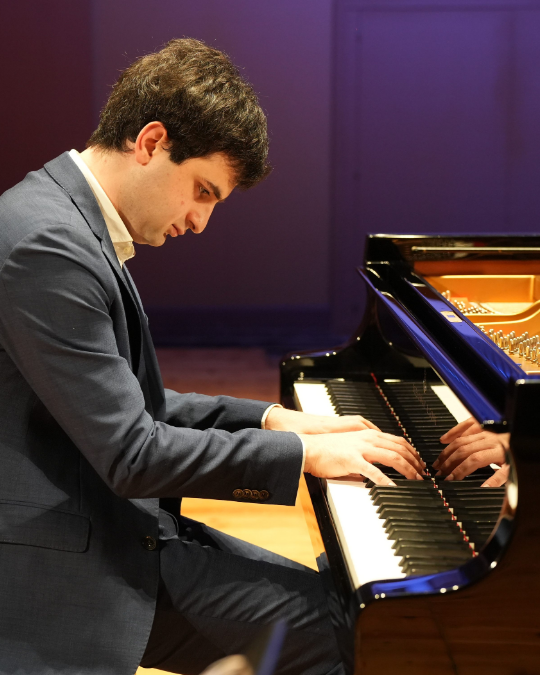
Your upcoming concerts include both classical and Georgian works. How do you build your program?
Every artist tries to include their national music, especially when it comes to unique but less known heritage like Georgian music. Presenting this on major international stages is very important. When foreign audiences become interested in it, it helps the global recognition of Georgian culture.
Your schedule is very busy. Can you share your plans for the new season?
About a month ago, I had a solo concert at the Conservatoire Grand Hall titled 1908 D – A 1940, where I performed sonatas by Rachmaninoff and Prokofiev. The title directly reflected the repertoire. These details help shape the audience’s experience. Rachmaninoff’s sonata is new in my repertoire and rarely performed because of its difficulty. I also want to share an important update: I recently signed a contract with one of the world’s oldest and most respected agencies. I now have a Spanish agent who will manage my future concerts. I’m the youngest artist in this agency, and I’m proud to stand alongside legends like Itzhak Perlman, David Garrett, Yo-Yo Ma, and Eliso Virsaladze.
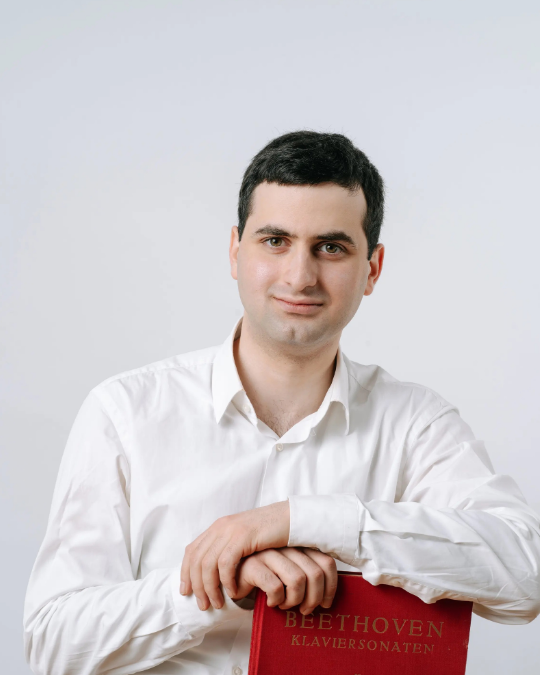
What is the next peak for you as a pianist?
That’s a good question. My next six months are already planned – concerts in Brazil, Germany, Spain, and Georgia. In July, I will record my second album in Barcelona. But in a way, these are just formal steps. In art, there is no final peak. It’s an endless process of growth. I believe the goal of every artist is to leave something meaningful behind – and that’s what I’m working towards.
Interview: Mariam Bekauri